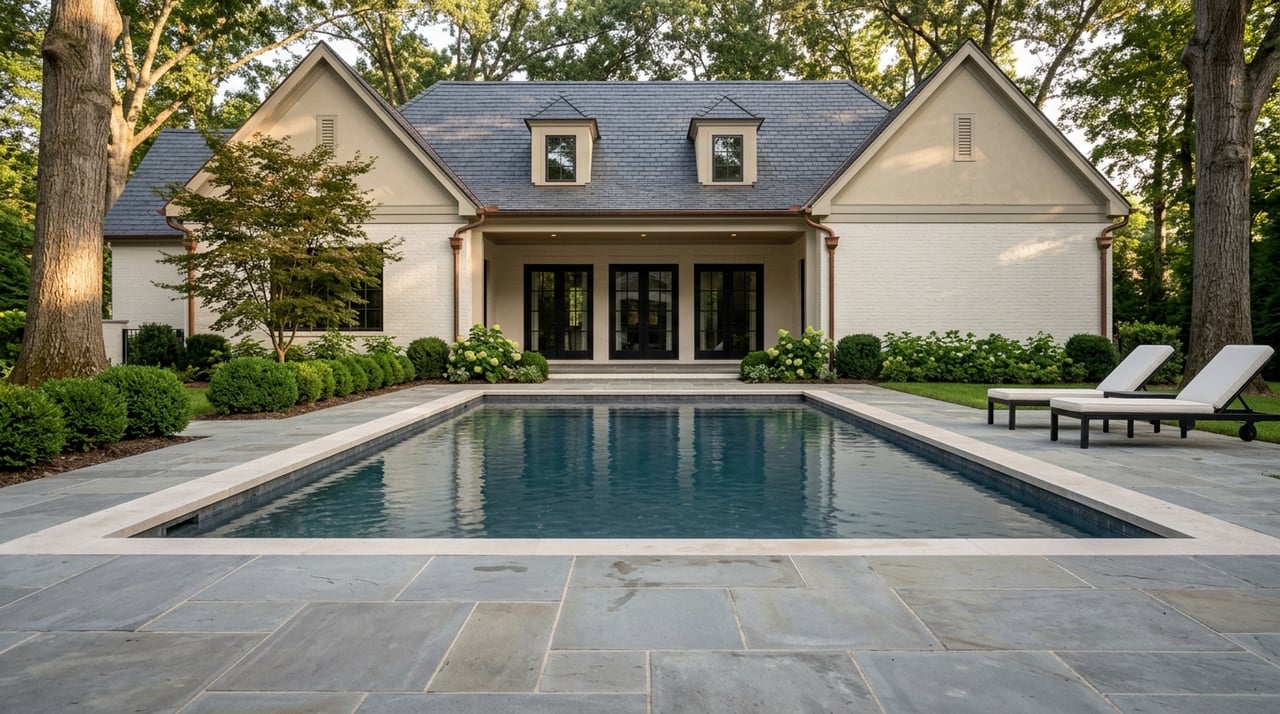
Evaluating Estate-Style Homes In Town And Country
May 28, 2026
May 28, 2026
Wondering what really makes an estate-style home in Town and Country worth a closer look? In this market, the answer is often bigger than the house itself. If you are weighing privacy, long-term livability, and resale potential, it helps to understand how lot size, zoning, drainage, and permitting shape daily life here. Let’s dive in.
In Town and Country, estate-style homes are closely tied to the land they sit on. The city’s planning and zoning framework is built around preserving a large-lot residential character, and residents consistently point to one-acre zoning, green space, parks, and safety as defining features of the community.
That context matters when you evaluate a property. A beautiful house on paper may feel very different once you factor in lot width, setbacks, neighboring uses, drainage patterns, and how much open space the site must maintain.
For many buyers, the first instinct is to compare square footage, finishes, and room count. In Town and Country, the lot often deserves equal attention because municipal rules strongly influence what can be built, added, or changed over time.
The city’s zoning code says Estate District single-family lots must have at least 80,000 square feet and 175 feet of width. These lots also require a 50-foot street setback, 50-foot side-yard setbacks, a 40-foot rear setback, 75% green space, a 13% floor-area cap, and a 2,000-square-foot minimum home size.
Suburban Estate lots have a different standard, but they are still substantial. Most require at least 43,560 square feet and 150 feet of width, with a 50-foot street setback, 75% green space for most lots, a 13% floor-area cap for most lots, and a 2,000-square-foot minimum home size.
What does that mean for you as a buyer? It means the shape and usable area of the parcel can matter as much as the overall acreage. Two homes with similar lot sizes may offer very different backyard layouts, privacy, and expansion options.
Privacy is one of the biggest reasons buyers are drawn to estate-style living. In Town and Country, privacy is influenced not only by landscaping but also by zoning geometry and site conditions.
Corner lots, double-frontage lots, and highly street-exposed lots may face stricter minimum-area rules. Flag lots are not permitted, and bufferyards are intended to reduce nuisances such as noise, glare, and building bulk between uses.
That means you should look past the current landscaping and ask how the site is positioned. A lot with strong width, deeper setbacks, and thoughtful orientation may feel more secluded than another property with the same number of trees.
Outdoor space is a major part of the appeal in Town and Country, but not every dream feature fits every lot. Before you fall in love with a backyard vision, it helps to understand what the city allows.
In the estate districts, above-ground pools, carports, fabricated metal storage sheds, and multi-level parking structures are not permitted. Residential parking must be enclosed and roofed, which makes garage configuration more important than many buyers expect.
If the property has retaining walls or the site slopes sharply, that deserves a closer look too. Retaining walls under 4 feet do not require permits, but walls 4 feet and higher do, and walls are allowed in side and rear setbacks.
This is why early due diligence matters. Pool type, garage design, hardscape plans, and grading work can all affect how easily you can adapt a property to your needs.
Large lots can be beautiful, but they can also come with more site complexity. In Town and Country, ravines, drainageways, floodplains, and stormwater concerns deserve careful attention.
The city limits development in ravines and drainageways, and it has a stormwater program for problems too large for one property owner to solve alone. Projects are prioritized when they score at least 5, cost more than $75,000, or drain more than 3 acres.
For a buyer, that means you should not treat water movement as a minor issue. If a property includes steep grades, prior drainage work, creek areas, bank stabilization, or low spots after rain, those details should be part of your evaluation from the start.
In an estate-style home, size alone does not guarantee comfort. Because Town and Country’s code includes size and form controls, the bigger question is often how well the home lives day to day.
As you tour properties, pay attention to circulation rather than just room count. Think about kitchen-to-outdoor flow, bedroom separation, stairs, storage, and guest space.
This matters even more if you plan to stay for many years. Census QuickFacts shows that 29.5% of Town and Country residents are age 65 or older, which makes long-term accessibility a practical consideration in this market.
You may want to consider whether the home offers main-floor living, flexible guest space, or potential for future accessibility updates. In luxury resale, a home that works well now and later can be easier to enjoy and easier to sell.
If you are buying with updates in mind, permit responsibilities are important in Town and Country. The city handles building and mechanical permits, while St. Louis County handles electrical and plumbing permits.
The city also notes that it is moving from the 2018 to the 2024 codes later this year. If you are planning a renovation soon after closing, it is smart to confirm which standards and review processes apply at that time.
Some projects are simpler than others. Same-size, same-type window replacements do not require a permit, but structural changes do, and furnace or air-conditioner replacement requires a permit.
In other words, even routine ownership updates may involve more coordination than buyers expect. That is especially true on larger parcels where grading, trees, drainage, and hardscape often connect to one another.
Mature trees are part of the appeal in Town and Country, but they can also affect what comes next. The city requires a tree protection plan as part of the initial permit process for demolition, architectural review, or building permits on new infill construction or projects that increase impervious area by 50% or more.
Demolition permits also require a tree protection plan, utility disconnect notices, and a $5,000 cash escrow for street guarantees. If you are considering a major remodel or teardown scenario, those requirements should be part of your planning conversation early.
For buyers, this is not a reason to avoid a property. It is simply a reminder that the site itself is a major asset, and the city expects that asset to be considered carefully.
Ownership cost is another area where a quick glance can be misleading. Town and Country currently levies $0.23 per $100 of assessed value, but property taxes are billed and collected by St. Louis County.
County budget materials show that property tax dollars go largely to school districts, with additional shares going to service districts, the county, and cities. The practical takeaway is simple: do not rely on the city levy alone when estimating your future tax bill.
Instead, verify the full property tax picture through the county’s property-tax inquiry tools during your due diligence period. On higher-value homes, that extra step can make a meaningful difference in your budgeting.
Town and Country remains an established, largely owner-occupied market. Census QuickFacts reports an owner-occupied housing rate of 86.5%, a 2025 population estimate of 11,619, and a median owner-occupied home value of $928,500.
Those figures support what many buyers already sense on the ground: this is a mature, higher-value suburb where land use, upkeep, and long-term fit matter. In a market like this, the best purchase is not always the home with the flashiest finishes. It is the one where the house, lot, and municipal rules all work together for your lifestyle.
When you evaluate an estate-style property in Town and Country, keep this short checklist in mind:
A thoughtful review upfront can help you avoid surprises later. It can also help you choose a home that feels just as strong in everyday life as it does during a first showing.
If you are comparing estate-style homes in Town and Country, having local guidance can make the process much clearer. Jill Azar & Jacque Mileusnic bring a collaborative, high-touch approach and deep familiarity with St. Louis neighborhoods, helping you evaluate not just the house, but the full property story with confidence.
From finding the perfect St. Louis neighborhood to negotiating the best sale price, we are with you from start to finish. We combine deep knowledge of the local market with a steadfast commitment to our clients. Let us make your buying or selling experience a complete success.
Jill Azar & Jacque Mileusnic
(314) 616-8836
[email protected]
(314) 795-7371
[email protected]
9889 Clayton Rd Saint Louis, MO 63124