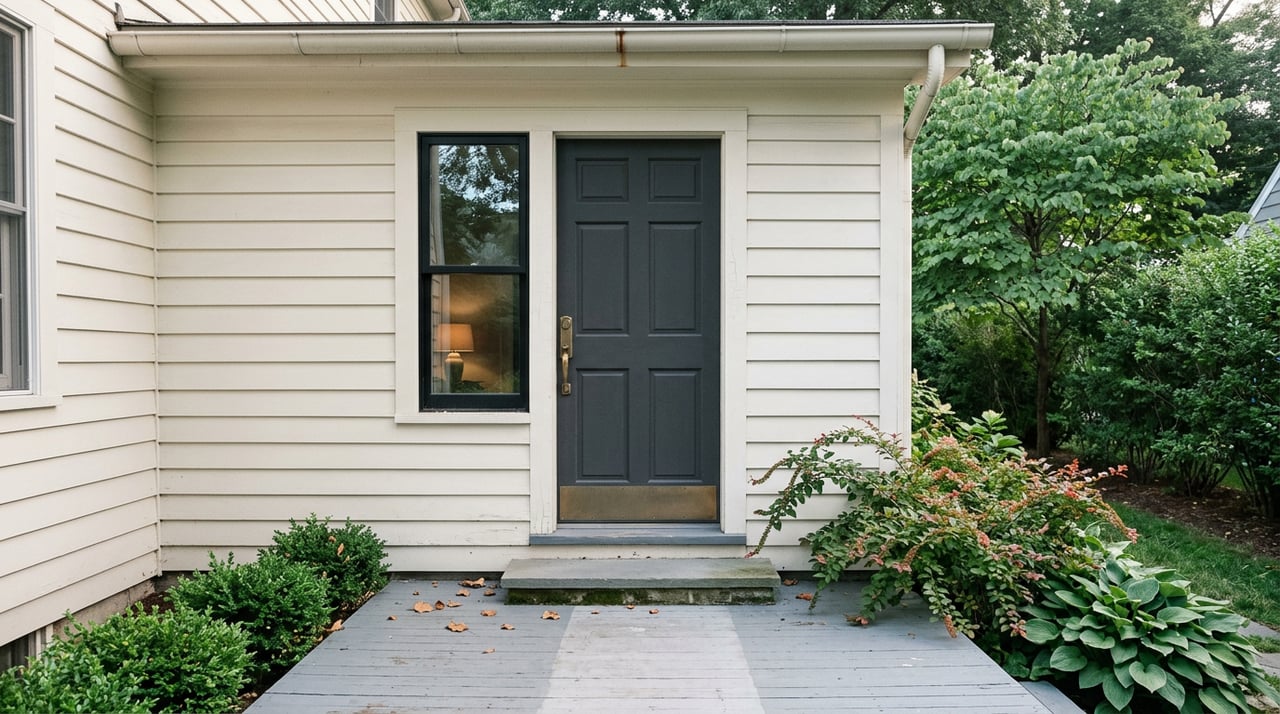
Webster Groves Occupancy Inspection Rules for Sellers
August 27, 2026
August 27, 2026
A seller who lists a home "as-is" in Webster Groves often believes that phrase settles the question of repairs. It settles who pays for them. It does not settle whether they happen.
That distinction catches people mid-contract more often than it should, because two separate inspections are running on parallel tracks and most sellers only think about one of them. There's the private home inspection your buyer's agent orders, the one that shows up in negotiations over price and credits. Then there's the inspection the City of Webster Groves runs on every single-family sale, the one tied to occupancy rather than contract terms, and the one that determines whether anyone can legally move into the house at all.
Nothing about the paperwork makes the difference obvious. Both involve someone walking through your house with a clipboard. Both produce a list of items. Sellers who have been through a private inspection before, the kind that ends in a negotiation, sometimes assume the city process works the same way: findable, negotiable, wave-away-able with the right contract language.
It doesn't work that way. The City of Webster Groves requires a passed occupancy inspection before it will issue an occupancy permit, and that requirement attaches to the sale itself, not to whether the buyer asked for it. The city's Housing Division inspects buildings any time ownership or occupancy changes, checking for violations of the Property Maintenance Code. A seller can still market and close the sale as-is. What "as-is" changes is who's on the hook for fixing what the inspection finds. It does not change whether the finding gets corrected before anyone occupies the house.
For sellers weighing whether to invest in repairs before listing, this is the fact that should reorder the decision. A private inspection contingency can be negotiated away in a competitive offer. The city's occupancy requirement cannot.
The City of Webster Groves lists the practical details for the scheduled inspection, whether the house is a starter bungalow near Big Bend or an Old Webster Tudor with a wraparound porch.
| Step | Detail |
|---|---|
| Trigger | Any change in ownership or occupancy of a single-family home |
| Application | Residential Occupancy Inspection Form, submitted 24 hours ahead |
| Fee | $75 inspection fee |
| Duration | Roughly 60 to 90 minutes on site |
| Access | An adult must be present if the home contains possessions |
| Outcome | Certificate of Compliance once violations are corrected |
The City of Webster Groves says apartments are inspected annually regardless of whether a lease turns over, and a Certificate of Compliance isn't required to move a new tenant into an existing unit. Webster Groves' single-family housing stock, largely older homes in walkable, tree-lined blocks, is what makes the sale-triggered inspection matter most. If you're picturing the kind of house that gets described in terms of its front porch and its original windows, you're picturing exactly the housing stock this rule was built around.
Here's the mechanism worth sitting with. A sale contract negotiates who pays. Missouri contracts routinely include as-is language, and Webster Groves doesn't prohibit that language or override it. What the city's process does is sit outside the contract entirely, operating on a separate legal basis: the home cannot be occupied until Property Maintenance Code violations are corrected, full stop.
That means an as-is sale can proceed exactly as negotiated, with the buyer accepting the home in its current condition and taking on the cost of any repairs themselves. But the repairs still have to happen before the new owner moves boxes through the front door. The city isn't a party to your purchase agreement. It doesn't care who signed up to pay for a cracked handrail or a missing GFCI outlet. It cares whether the handrail gets fixed before somebody lives behind it.
Sellers who assume as-is means "leave it exactly as it sits" are the ones who find out otherwise at the worst possible moment, usually a week before closing when the buyer's lender asks where the Certificate of Compliance is.
Once violations are corrected and the inspection passes, the city issues a Certificate of Compliance. That certificate carries a shelf life of up to three months. It exists to confirm that the property met code at a specific point in time, and it explicitly does not certify the overall condition of the home the way a private inspection report might. The city says as much directly: buyers are still encouraged to get their own independent inspection, because the two documents answer different questions.
The practical consequence for sellers is timing. If your closing date slides, and closings slide more often than anyone plans for, a certificate obtained too early can expire before the sale finishes. Sellers who start the inspection and repair process the moment they decide to list, rather than after an offer arrives, give themselves room to absorb a delay without scrambling to reschedule an inspection during an active under-contract period.
Homes inside Webster Groves' historic districts carry one more layer worth knowing about before repairs start. Exterior work on a home in a designated historic district, including Old Webster, can require additional review before the work proceeds. That review exists to keep street-facing repairs consistent with the character of the block: original masonry, roof lines, and window patterns are the kinds of details preservation guidance points to directly.
This matters because the items a Property Maintenance Code inspection flags most often are exterior items: paint, gutters, drainage, and window condition among them. A seller in a historic district who assumes a repair can start the day after an inspection may find themselves waiting on an additional review before a contractor can touch the front porch. Building that review into your prep timeline avoids a second surprise stacked on top of the first.
Federal lead-based paint disclosure rules also belong on the prep checklist. That's a separate requirement from the city's process, but it belongs on the same prep checklist.
The inspection isn't looking for cosmetic imperfections. It's checking for maintenance and safety items that tend to accumulate quietly in a home that's been well loved but not recently renovated. The categories that come up most consistently:
None of these are unusual findings in a home that's been occupied for a decade or more. What matters is getting ahead of them rather than discovering them for the first time during a scheduled inspection with a closing date already on the calendar.
The sellers who move through this process without a mid-contract scramble are the ones who treat the city inspection as the first item on their prep list, not the last. That means scheduling a walkthrough with a contractor months before listing, not weeks, and treating any historic-district exterior work as a separate line item with its own review timeline.
It's the same instinct that makes sense for any well-prepared listing: know what a buyer's inspector will find before they find it. Webster Groves simply adds a second inspector to that equation, one whose findings aren't negotiable and whose timeline runs independent of your contract.
If you're weighing whether your Webster Groves home is ready for this process, a conversation before you list is worth more than one after an offer arrives. You can view current Webster Groves listings and neighborhood details here, and if you're curious about the architectural character that makes this housing stock what it is, our look at the styles that define Webster Groves streets is worth a read alongside this one.
Does listing as-is exempt me from the city's inspection? No. As-is affects who pays for repairs. It does not affect whether the city requires them corrected before occupancy.
Do I still need a private home inspection if I pass the city's inspection? Yes. The two serve different purposes. The city confirms Property Maintenance Code compliance at one point in time. A private inspection gives a buyer a broader picture of the home's condition, and the city itself recommends buyers get one regardless of the Certificate of Compliance.
How long is the Certificate of Compliance valid? Up to three months from issuance, which is why timing the inspection close to your actual closing date matters more than getting it done early and hoping the sale doesn't slip.
Does this rule apply the same way everywhere in St. Louis County? No. Occupancy and housing inspection requirements are set municipality by municipality, and they vary from one St. Louis County city to the next. What's true in Webster Groves isn't automatically true next door.
What if my home is in a historic district? Exterior repairs may require additional review in addition to passing the standard housing inspection. Build that review into your timeline separately.
Selling a home in Webster Groves comes with more moving pieces than a for-sale sign suggests, and the city's inspection process is one most sellers only learn about once they're already in it. If you'd like a clear read on what your home would need before it's ready for that inspection, or a sense of what it could sell for once it's prepared, Jill & Jacque would welcome the conversation. You can start with a free home valuation or reach out directly to talk through your specific timeline.
This article is general information, not legal, tax or financial advice. Consult a qualified professional about your situation.
From finding the perfect St. Louis neighborhood to negotiating the best sale price, we are with you from start to finish. We combine deep knowledge of the local market with a steadfast commitment to our clients. Let us make your buying or selling experience a complete success.
Jill Azar & Jacque Mileusnic
(314) 616-8836
[email protected]
(314) 795-7371
[email protected]
9889 Clayton Rd Saint Louis, MO 63124